
November in Fort Lauderdale: Fall Where It Feels Like Summer
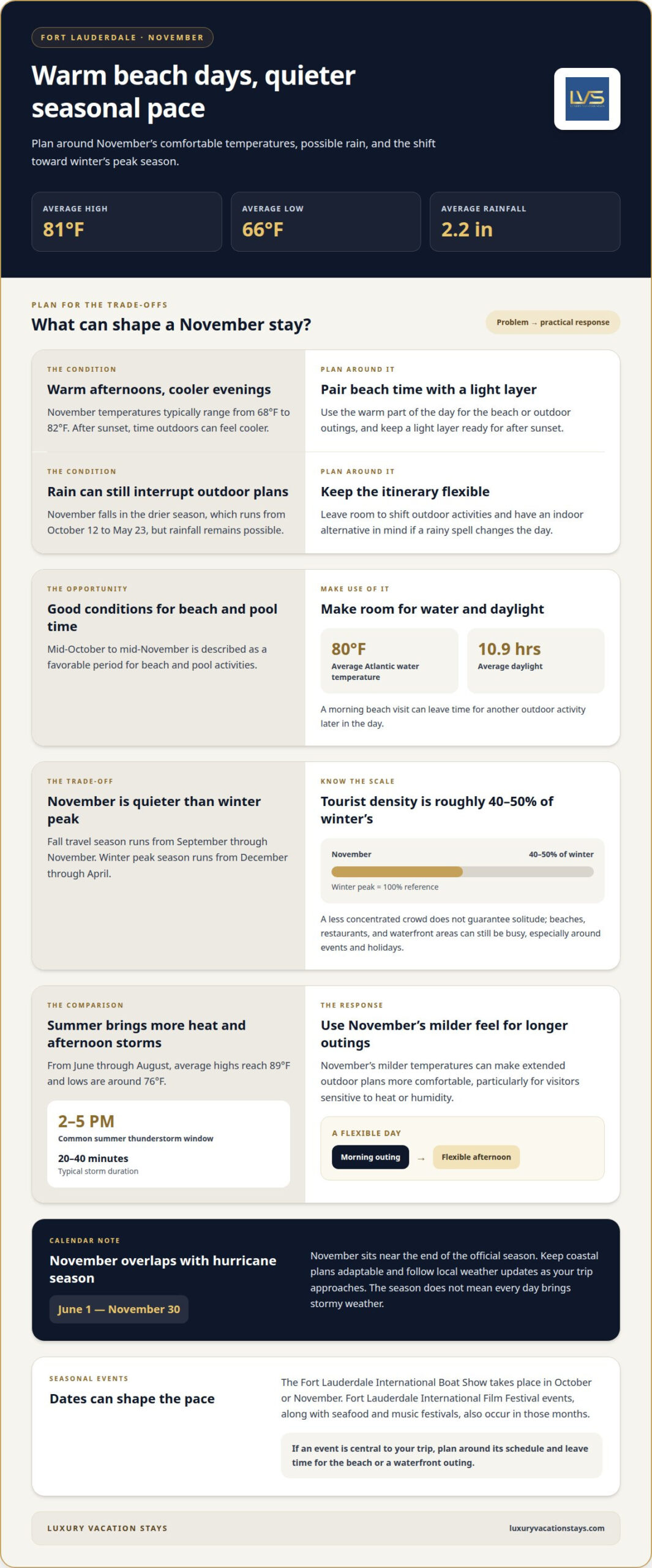
November in Fort Lauderdale, where fall feels like summer, is a compelling time to trade autumn chill for beach-ready weather. Average highs reach 81°F, and average lows are 66°F. The month averages 2.2 inches of rain, while its lighter crowds offer a different pace from winter’s peak.
If you’re deciding when to visit, you likely want sunshine for the beach and time to enjoy the outdoors. November falls between the autumn travel season and the destination’s peak period, which runs from December through April. That seasonal transition can shape both your plans and your rental timing when booking through Luxury Vacation Stays.
Here’s how November weather can shape beach and outdoor plans, what seasonal crowds may mean for rental timing, and how the city’s calendar can affect your stay. These details can help you decide whether November in Fort Lauderdale, where fall feels like summer, suits the escape you have in mind.
Key Takeaways
- Use November’s warm days and cooler evenings to plan beach time, outdoor outings, and what to pack.
- Consider how the shift from fall into Fort Lauderdale’s winter peak may affect your preferred rental timing.
- Build a flexible outdoor itinerary around seasonal weather, including the possibility of rain.
- Look at the city’s seasonal events when choosing which part of November to visit.
- Choose your rental with your plans in mind, from relaxed beach days to time spent exploring Fort Lauderdale’s waterways.
1. When Is the Best Time to Visit Fort Lauderdale?
For Fort Lauderdale’s traditional winter-season visit, the best time is December through April. November is a warm transition, with average highs of 81°F and average lows of 66°F. Temperatures typically range from 68°F to 82°F, and rainfall averages 2.2 inches. November in Fort Lauderdale, where fall feels like summer, suits travelers seeking beach weather before the winter peak and holiday period.
Climate summaries vary slightly: one gives November’s average temperature as 74°F and average low as 69°F, while another lists an average low of 66°F. Treat these figures as a guide to the month rather than a forecast for a particular day. For a November in Fort Lauderdale that feels like summer, plan around warm afternoons and cooler evenings, with a light layer ready for time outdoors after sunset.
November averages 10.9 hours of daylight, leaving time to combine a morning beach visit with a walk or meal outside. The Atlantic’s average water temperature is 80°F, making a swim appealing for many visitors. Mid-October to mid-November is a favorable period for beach and pool activities. The drier season runs from October 12 to May 23, though rainfall can still interrupt outdoor plans. Keep an indoor alternative in mind for a rainy spell.
Fall brings events beyond the beach. The Fort Lauderdale International Boat Show takes place in October or November, and Fort Lauderdale International Film Festival events occur in both months. Seafood and music festivals also feature in October and November. If an event is central to your trip, plan around its schedule, then leave time for the beach or a waterfront outing.
Summer feels different. From June through August, average highs reach 89°F and typical lows sit around 76°F. Afternoon thunderstorms commonly occur from 2 to 5 PM and last 20 to 40 minutes. November’s milder temperatures can make extended outdoor plans more comfortable, especially for visitors sensitive to heat or humidity. A morning outing followed by a flexible afternoon is a practical way to enjoy the day.
You can get around Fort Lauderdale on foot, by taxi or rideshare, or on a Broward County Transit bus. Bus costs depend on fare type, while taxi and rideshare costs vary with route, distance, and demand.
Choose November for warm beach days and a quieter seasonal atmosphere, or visit from December through April for the traditional peak season. Plan outdoor activities around the daily forecast and keep an indoor option in mind in case rain changes your schedule.
2. Season-by-season weather in Fort Lauderdale
Fort Lauderdale’s weather moves through warm, humid summers and milder winters, with spring and fall between them. Each season changes the feel of coastal outings, from afternoon heat to comfortable days for exploring outdoors. For visitors planning around the calendar, the main shift is South Florida’s dry season, which runs from October 12 to May 23. November falls within this drier stretch, while summer brings more heat and frequent afternoon storms.
Summer runs from June through August, with daytime highs of 86°F to 90°F and lows of 76°F to 78°F. The warmth can make shaded breaks and indoor plans useful parts of a full day outside. September can still bring leftover summer storms, so early fall weather may feel less settled than the season’s calendar suggests. By October, temperatures range from 73°F to 86°F, with about 5 inches of rain. That transition brings a noticeable change from summer, though showers remain part of the coastal climate.
Late October and November typically bring days in the mid-80s°F, before winter settles in. Winter spans December through February, with daytime highs of 73°F to 78°F and overnight lows of 60°F to 67°F. February therefore offers a milder daytime profile than summer, but evenings can feel cool beside the water. Packing a light layer makes sense for visitors who expect to stay outdoors after sunset.
Spring, from April through May, brings daytime highs of 80°F to 84°F and lows of 70°F to 73°F. Those temperatures suit a day divided between the beach, a waterfront meal, and an evening walk. The seasonal shift is gradual rather than abrupt: warm weather remains part of the year-round experience, while humidity and rainfall patterns change the best time of day for outdoor plans.
Hurricane season officially runs from June 1 to November 30, so November sits near its end. That calendar overlap matters when setting travel dates, especially for plans centered on the coast. Keep your schedule adaptable and follow local weather updates as your trip approaches. Hurricane season does not mean every day brings stormy weather; it identifies a period when tropical systems can affect Florida.
For practical planning, match your itinerary to the season: reserve long outdoor outings for comfortable parts of the day, and keep an indoor alternative for unsettled weather. In summer, plan around heat and afternoon storms; in winter, bring an extra layer for cooler evenings. Spring and fall offer transitional conditions, with October’s rainfall and September’s lingering storms worth considering. If you’re shaping a Fort Lauderdale stay around seasonal weather, discuss your travel dates and plans.
3. Seasonal crowd and accommodation trends
Fort Lauderdale’s fall travel season runs from September through November, before the winter peak begins. November offers warm-weather travel in a period when tourist density is roughly 40 to 50% of winter’s. Peak travel season runs from December through April. That makes November a useful choice for visitors seeking a comfortable balance between seasonal activity and a less concentrated crowd.
The difference is one of pace, not a guarantee of solitude. Beaches, restaurants, and popular waterfront areas can still draw visitors in November, especially during events and holiday travel dates. Consider the atmosphere you want: a busy, festive visit may suit winter, while fall may feel quieter. Your preferred neighborhood and daily itinerary also affect how crowded your stay feels.
Accommodation demand follows the seasonal shift. If you’re planning a visit from December through April, book rooms or condos well in advance, especially for the holidays. If your dates are flexible, compare November with the winter period before deciding. Demand can vary by week, so match your arrival to the dates that matter most to your plans rather than relying on the season alone.
For a November stay, first decide what matters most: beach access, time outdoors, or proximity to restaurants and seasonal events. Then choose accommodation that supports those priorities. A private rental can suit travelers who value having their own space, while a hotel may better fit a trip centered on hotel amenities. The right option depends on how you plan to spend your days and evenings.
Fall and winter can call for different approaches to planning. November’s lower tourist density may make it easier to shape a flexible itinerary, while the December-to-April peak calls for earlier accommodation planning. If your visit overlaps a holiday, arrange your preferred lodging well ahead. For other dates, compare options near your desired location and suited to your trip before setting your itinerary.
Think through the practical details before booking: the dates you can travel, the area you want to stay in, and whether privacy or hotel facilities matter more. This makes it easier to weigh a November visit against winter’s busier season. If you’re planning a Fort Lauderdale stay and want to discuss your dates and accommodation preferences, share your travel plans.
4. Best time for outdoor and beach activities
Early November begins Fort Lauderdale’s favorable stretch for general outdoor activities, which continues into early May. For beach and pool time, mid-October to mid-November is a particularly suitable seasonal window. You can pair a coastal morning with lunch outdoors or an afternoon stroll instead of packing every activity into one part of the trip. Plan for the beach, then leave room to explore elsewhere.
There isn’t one citywide closure schedule for every Fort Lauderdale beach and attraction in November. Individual sites set their own operating hours and access arrangements, and nearby event setups can affect how specific public areas are used.
The Atlantic’s November average water temperature is 80°F, a comfortable backdrop for a swim or a relaxed day by the shore. Outdoor plans can also include walking, paddleboarding, or exploring the city’s waterways. Snorkeling, deep-sea fishing, paddleboarding, and jet skiing are most popular between May and September, so November visitors may prefer to build days around beach time and land-based outings.
Choose activities by season, not only by the month’s name. August falls within Fort Lauderdale’s summer, when daytime highs reach 86°F to 90°F. September can bring lingering summer storms. November’s place in the drier season makes it a natural time to plan more outdoor hours, while keeping an indoor option for a rainy spell. A beach morning followed by a flexible afternoon gives the day a useful rhythm.
November’s calendar offers cultural and waterfront activities beyond the beach. Fort Lauderdale International Film Festival events take place in October and November, as do seafood and music festivals. Preparations for holiday boat parades also take place in November, bringing activity to the waterfront ahead of the seasonal parade. Check event dates when deciding where to spend an evening.
For a more curated day, pair a beach visit with a meal or waterfront outing instead of trying to fit everything into one schedule. A luxury stay can leave room for simple pleasures: a morning swim, a leisurely lunch, and time to explore before sunset. If tropical weather changes your plans, move the beach visit to another day and choose indoor attractions or dining in the meantime.
Fort Lauderdale’s outdoor season suits visitors looking for variety, from quiet time beside the Atlantic to lively November events. Plan beach and pool time within the mid-October to mid-November window, then arrange other outings around the local calendar. This approach lets you enjoy the coast while making room for the city’s cultural and waterfront experiences.
5. What should visitors pack for Fort Lauderdale in November?
Pack for warm afternoons, cooler evenings, beach time, and occasional rain. Fort Lauderdale’s November average high is 81°F, while average lows sit in the 60s. Light clothing works for daytime, but a cardigan or light jacket adds comfort after sunset. A swimsuit suits the average 80°F ocean temperature, and a compact umbrella helps prepare for the month’s rainfall.
Pack layers rather than heavy autumn clothing. A breathable shirt, shorts, and comfortable walking shoes work well for daytime plans, such as strolling along Fort Lauderdale Beach or exploring Las Olas Boulevard. Add a light layer for an evening meal outdoors. This combination suits sunny afternoons and cooler coastal evenings without requiring a separate outfit for every activity.
For beach days, pack swimwear, a cover-up, sandals, and a change of clothes for after swimming. A beach bag keeps those items together, while sunglasses and a hat can make time beside the Atlantic more comfortable. November averages 10.9 hours of daylight, leaving room for a swim followed by a waterfront lunch. Keep an extra dry layer available if a passing shower interrupts your plans.
- Daytime outfits: Pack breathable tops, shorts, and walking shoes for outdoor sightseeing.
- Evening layer: Bring a cardigan or light jacket for cooler nights.
- Beach essentials: Include swimwear, sandals, a cover-up, sunglasses, and a hat.
- Rain preparation: Add a compact umbrella or lightweight rain layer for changeable weather.
- Activity-specific items: Choose comfortable footwear for a walk, or pack suitable clothing for a boat outing.
Consider your itinerary when choosing footwear and accessories. A day split between the beach and Las Olas Boulevard calls for sandals and walking shoes. For a boat outing, bring an extra layer for the breeze. If you’re attending a Fort Lauderdale International Film Festival event, pack an outfit that works for both daytime exploring and an evening program.
November brings an average of 2.2 inches of rainfall, so a rain layer is a practical addition, not a reason to pack bulky storm gear. Keep it accessible in your day bag instead of buried in checked luggage. A small pouch for damp swimwear also helps separate beach items from dry clothes during the return journey.
Before leaving, match your packing list to your planned days: beach, city walks, waterfront dining, and any scheduled events. For a stay with beach and outdoor plans in mind, discuss your Fort Lauderdale rental plans.
Luxury Vacation Stays: Fort Lauderdale Luxury Rentals
Luxury Vacation Stays offers Fort Lauderdale Luxury Rentals for travelers planning a November stay around beach time, outdoor outings, and a comfortable place to return to. Once you’ve considered the weather, seasonal crowds, and activities, choose a rental that fits your preferred pace and location. A private vacation rental can provide a comfortable setting to unwind between outings.
Explore rental options with Luxury Vacation Stays when you’re ready to plan your visit. Property owners can also inquire about Full-Service Property Management. Contact Luxury Vacation Stays to plan your stay.
Shape a Stay Around the Way You Want to Travel
Memorable trips leave room for your own rhythm, whether that means lingering over breakfast, returning from the beach between outings, or making evenings part of the experience. Let that preference guide your choice of accommodation. A well-matched setting makes it easier to enjoy Fort Lauderdale’s coast and the experiences you want to make your own.
For a November in Fort Lauderdale where fall feels like summer, Luxury Vacation Stays offers Fort Lauderdale Luxury Rentals. Its collection also includes Antigua Luxury Rentals and Dominican Republic Luxury Rentals for travelers considering another destination for a future escape. Choose the destination that fits your plans, then take the next step toward arranging your stay.
Contact Luxury Vacation Stays to discuss your travel plans. Your next coastal escape can begin with a thoughtful choice.
Frequently Asked Questions
When Is the Best Time to Visit Fort Lauderdale?
The best time to visit depends on whether you prefer a quieter fall trip or the winter season. November offers warm conditions before the peak travel period, which runs from December through April. When comparing dates, consider your priorities: beach time, seasonal events, crowd levels, and accommodation timing. November can suit an outdoor-focused trip, while winter aligns with Fort Lauderdale’s busiest travel period.
What is the average weather in Fort Lauderdale in November, including temperatures, humidity, and rainfall?
November temperatures typically range from 68°F to 82°F, and the month averages 2.2 inches of rainfall. Fort Lauderdale also averages 15.5 muggy or worse days, so breathable clothing is useful for outdoor plans. Conditions can shift across the day; a light layer suits cooler evenings, while a compact rain layer helps keep a walk or meal outdoors from derailing your plans.
How warm is the ocean in Fort Lauderdale in November, and is it suitable for swimming?
Fort Lauderdale’s average ocean temperature in November is 80°F, making the water suitable for swimming. Pack swimwear and a change of clothes if you plan to combine a beach visit with lunch or sightseeing. For a more relaxed outing, set aside time to swim without scheduling another activity immediately afterward. That leaves room to dry off and enjoy the coast at an unhurried pace.
What are the best things to do in Fort Lauderdale in November?
Pair a beach or pool visit with an outdoor walk, a waterfront meal, or a cultural event. The Fort Lauderdale International Film Festival and seafood and music festivals hold events during October and November. If boating interests you, preparations for Fort Lauderdale’s holiday boat parade take place in November. Choose activities that suit your dates, and leave room to adapt to changing weather.
What festivals and events take place in Fort Lauderdale in November?
November’s event calendar includes Fort Lauderdale International Film Festival events and seafood and music festivals. The Fort Lauderdale International Boat Show takes place in October or November, while preparations for the holiday boat parade occur during November. Event dates vary, so use your travel dates to decide which evenings to keep open. A flexible schedule makes it easier to fit a festival or waterfront outing into your stay.
Is November part of hurricane season in Fort Lauderdale, and what weather risks should travelers know about?
Yes. The official Atlantic hurricane season runs through November 30, so November remains within the season. Rain and changing coastal weather can affect plans, even during a generally warm visit. Keep your outdoor schedule adaptable, especially for beach or boating days, and make room for an indoor alternative. This simple approach helps preserve your itinerary if weather conditions change during your stay.
What are the best beaches and outdoor attractions in Fort Lauderdale for a November visit?
Fort Lauderdale’s Atlantic coastline offers plenty of beach settings to include in a November itinerary. Hollywood Beach, about 15 minutes south of Fort Lauderdale, is another coastal option. For a change from the shore, the city has more than 300 miles of navigable waterways. Choose between time on the sand and a waterway-focused outing based on the pace and setting you want for the day.
beach vacations, Florida weather, Fort Lauderdale, Luxury Vacation Rentals, November travel, seasonal events, vacation planning