
November in Fort Lauderdale: Where Fall Feels Like Summer
November in Fort Lauderdale is when fall feels like summer, with temperatures typically ranging from 68°F to 82°F. It’s a shoulder-season month, while December through April is the recommended period for more reliable visiting weather, with temperatures of 70-80°F.
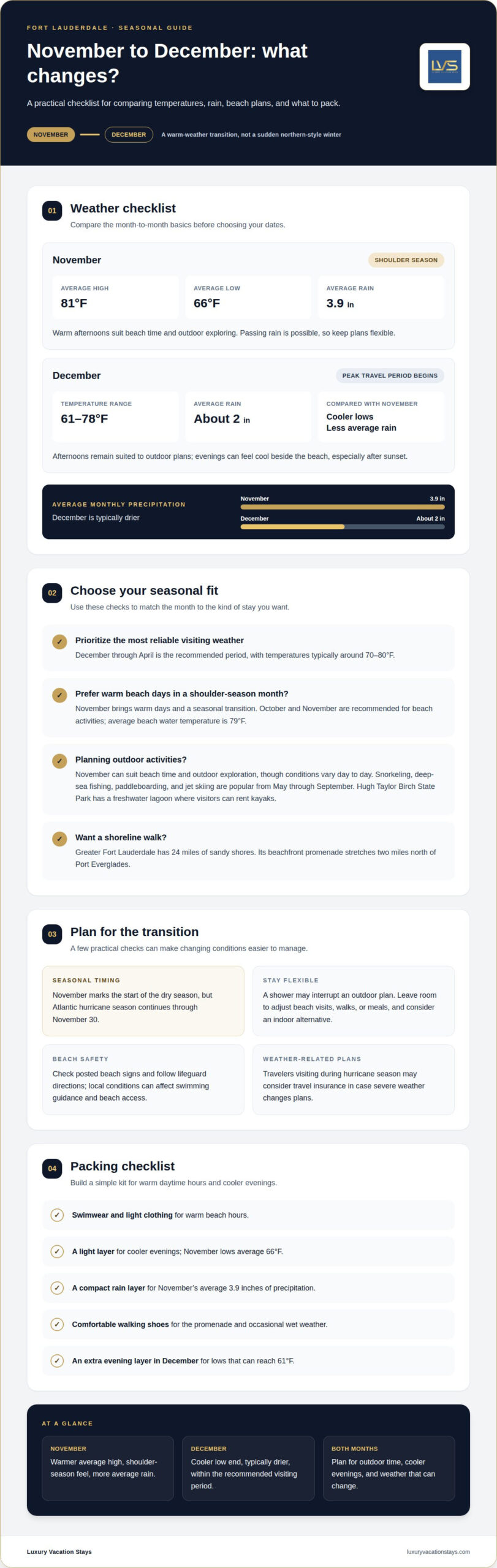
If you’re drawn to warm days by the water but want to know what the transition into winter actually feels like, November offers a distinctive balance. Its average high is 81°F and average low is 66°F, with an average of 3.9 inches of precipitation.
This guide compares November and December weather, explains what shoulder season means for a Fort Lauderdale stay, and helps you decide when to visit. You’ll find what makes November appealing and what to expect as the season shifts toward December.
Key Takeaways
- Choose December through April for the most reliable visiting weather, or consider November if you prefer a shoulder-season stay with warm days.
- October and November are well suited to beach activities, and the average beach water temperature is 79°F.
- November marks the start of Fort Lauderdale’s dry season, though the Atlantic hurricane season continues through Nov. 30.
- Compare November and December conditions to decide which month best fits your plans for beach time and outdoor activities.
1. When Is the Best Time to Visit Fort Lauderdale?
For the most reliable visiting weather, plan a Fort Lauderdale trip from December through April, when temperatures are typically 70-80°F. November is a shoulder-season alternative, with warm beach days and a seasonal transition that feels distinct from winter elsewhere in America. For visitors prioritizing beach activities, October and November are also recommended months.
Greater Fort Lauderdale offers 24 miles of golden sandy shores, with a beachfront promenade for walking beside the Atlantic. The promenade stretches two miles north of Port Everglades, giving visitors a scenic route between the waterfront and nearby city sights. November temperatures suit a mix of beach time and outdoor exploration, though conditions can vary from day to day.
The average water temperature at Fort Lauderdale’s beach is 79°F. That warm water makes a swim appealing to many visitors, while the beach also provides space to relax, stroll, or enjoy the shoreline. Check posted beach signs and follow lifeguard directions when choosing where to swim, since local conditions can affect beach access and swimming guidance.
Snorkeling, deep-sea fishing, paddleboarding, and jet skiing are popular in Fort Lauderdale from May through September. November falls outside that peak watersports period, but you can still plan beach activities around the weather and your preferred pace. For a quieter outing, Hugh Taylor Birch State Park has a freshwater lagoon where visitors can rent kayaks.
Are there travel advisories or beach and swimming rules for Fort Lauderdale in November? The Atlantic hurricane season runs from June 1 to Nov. 30, and travelers are advised to consider travel insurance in case severe weather changes plans. At the beach, posted signs and lifeguard directions provide guidance on swimming conditions and local restrictions.
November’s event calendar includes the Las Olas Art Fair in early November, the Fort Lauderdale International Film Festival, and the annual Thanksgiving Day Parade. Preparations for holiday boat parades also take place around the city, adding a seasonal note before December’s festivities. Check event dates when planning your itinerary, and include a festival or parade if it fits your interests.
What should visitors pack for Fort Lauderdale in November? Bring swimwear and light clothing for warm beach hours, plus a light layer for cooler evenings, when lows average 66°F. With 3.9 inches of average November precipitation, include a compact rain layer and footwear suited to both the promenade and occasional wet weather.
2. November and December weather in Fort Lauderdale
November and December bring a warm-weather transition to Fort Lauderdale, not a sudden shift into northern-style winter. Both months generally have daytime highs in the 70s and nighttime lows in the 60s. The title “November in Fort Lauderdale: Where Fall Feels Like Summer” captures that contrast with colder climates. A light layer can make evening plans more comfortable.
November’s weather still carries some of fall’s changing conditions. Fort Lauderdale receives an average of 3.9 inches of precipitation during the month, so a beach vacation can include passing rain as well as clear stretches. Keep outdoor plans flexible: a shower may interrupt a walk or lunch outside, while indoor restaurants offer an easy alternative. A compact rain layer also takes little room in a day bag.
December is typically drier, with about 2 inches of rain. Temperatures range from 61°F to 78°F, a useful guide for planning mornings, afternoons, and evenings. The lower end of that range can feel cool beside the beach, especially after sunset, while afternoons remain suited to outdoor plans. Pack light clothing for daytime and an extra layer for evening outings.
When choosing between the months, consider the balance of warmth and rainfall. November brings mild, beach-friendly temperatures, while December has cooler lows and less average rain. Neither month guarantees uninterrupted sunshine, so leave room to adjust plans for beaches, walks, and restaurant reservations. An indoor activity can help keep a holiday itinerary flexible when the weather changes.
The idea behind “November in Fort Lauderdale: Where Fall Feels Like Summer” works best for travelers who plan for both warm afternoons and cooler nights. Choose breathable daytime clothing, swimwear, comfortable walking shoes, and a light sweater or jacket. A foldable rain layer suits November’s average precipitation, while December’s 61°F low makes an evening layer especially useful.
Seasonal conditions can influence which rentals suit your preferred rhythm. If you’re planning a Fort Lauderdale stay around November or December weather, discuss your preferred dates and stay. That conversation can help align your accommodation plans with beach days, holiday outings, and quieter evenings.
Fort Lauderdale’s October temperatures range from 73°F to 86°F, with about 5 inches of rain, while January temperatures range from 59°F to 77°F, with about 2 inches of rain. These neighboring-month benchmarks put November and December’s conditions in context, though temperature ranges and rainfall figures do not guarantee what any particular day will bring. The Seminole Hard Rock Winterfest Boat Parade attracts more than a million viewers, so visitors may want to account for this event when shaping their plans.
Fort Lauderdale is in the Eastern Time Zone and observes Eastern Standard Time in winter and Eastern Daylight Time when daylight saving time is in effect. Travelers visiting during hurricane season may consider travel insurance in case bad weather changes their vacation plans. This can add flexibility when outdoor activities are part of the itinerary.
3. November as a shoulder-season month
November falls between Fort Lauderdale’s quieter travel season and its winter peak. May and November are identified as shoulder months, while peak travel runs from December through April. The quiet season spans June through October, placing November at the start of a busier period. It’s a transition, not a guarantee of empty beaches or uncrowded restaurants.
The weather shifts, too. Fort Lauderdale’s dry season begins in November, after the rainy season’s showers increase in strength and duration from May into autumn. May through November is also described as a period of 90-degree heat, while summertime highs average 89°F. November therefore marks a seasonal turning point, though the calendar alone can’t predict conditions on a particular outdoor outing.
For a waterfront itinerary, consider how this transition affects each day. Pair time at Fort Lauderdale Beach with an indoor alternative, such as a museum or restaurant, so a passing shower doesn’t define the schedule. October averages about 5 inches of rain, offering context for the wetter months that precede November. The useful planning step is to leave room for flexible timing rather than assigning every activity outdoors.
November also remains within the Atlantic hurricane season, which runs from June 1 to Nov. 30. Travelers are advised to consider travel insurance in case severe weather forces vacation-plan changes. This date range matters for fall travel planning, especially for a stay scheduled near the month’s end. Keep reservations and outdoor plans organized so adjustments are easier if weather disrupts the itinerary.
Seasonal events can shape where visitors spend time. Fort Lauderdale’s fall calendar includes holiday boat parade preparations in November, while the Seminole Hard Rock Winterfest Boat Parade follows a 12-mile route. Preparations and the parade itself are distinct parts of the seasonal calendar, so don’t assume the parade takes place during November. Check the event dates before building a waterfront evening around it.
November’s shoulder-season timing can help you balance beach time with seasonal events. December through April is the peak travel period, while June through October is quieter; November falls between those patterns. Crowds vary with dates and events, so a holiday weekend may feel different from an ordinary weekday. Choose dates based on your priorities, whether that’s outdoor flexibility, parade activity, or the established winter season.
4. November temperatures in Fort Lauderdale
November temperatures in Fort Lauderdale typically range from 68°F to 82°F. November temperatures in Fort Lauderdale are generally warmer during the day and cooler overnight. These figures describe a warm month with a noticeable difference between afternoon and overnight conditions. October is slightly warmer, with an average high of 85°F and lows in the 70s. November brings a gentler profile for visitors who prefer milder daytime heat.
The typical temperature range can help you plan each day. Schedule outdoor activities for the afternoon, when it’s generally warm, and bring a light layer for cooler evenings. Swimwear and breathable clothing suit a beach day; a sweater or light jacket can add comfort after sunset. Keep the shift from a warm afternoon to a cooler night in mind when planning dinner or a waterfront walk.
Fort Lauderdale’s year-round climate ranges from 61°F to 89°F, so November sits between its cooler and hotter extremes. That context can help visitors decide what “fall” means here: temperatures remain comfortable for outdoor plans, without the height of summer heat. If you visit Fort Lauderdale for a mix of beach time and city exploration, pack for both conditions rather than relying on one outfit throughout the day.
October offers a useful seasonal comparison beyond temperature. The Fort Lauderdale International Boat Show takes place in October, bringing more than 1,500 boats to marinas and waterways around the city. By November, the average high has eased from October’s 85°F to 81°F. This small shift can make time spent discovering attractions or strolling near the waterfront feel more temperate.
Fort Lauderdale is often called the Venice of America, an apt image for a city shaped by waterways. November’s typical temperatures suit outdoor sightseeing, but simple layers are still useful. Pack light daytime clothes, comfortable shoes, and an evening layer. This combination works for a day near the coast and a relaxed meal later, without packing only for summer weather.
For the clearest expectation, think of November as warm by day and cooler after dark, rather than uniformly hot. The typical 68°F to 82°F range and 81°F average high give a useful planning guide, while the 66°F average low signals the evening shift. These averages can’t describe each day exactly, but they help you choose clothing and time outdoor activities thoughtfully.
Average temperature in Fort Lauderdale in November
Fort Lauderdale’s November temperatures typically range from 68°F to 82°F. The average high is 81°F, and the average low is 66°F. Together, these figures describe warm afternoons and noticeably cooler nights. A simple planning summary is pleasant daytime warmth with a light evening chill, rather than one steady temperature throughout the day.
“Average” can refer to different measurements. For travel planning, average highs and lows show the daily temperature range more clearly than a single figure. Afternoons may feel summery, while early mornings and evenings call for an extra layer. Use typical temperatures to guide your clothing and activities, not as a promise about every November day.
That daily contrast matters when planning your itinerary. A beach visit or outdoor walk fits naturally into the warmer part of the day, while dinner outdoors may feel cooler after sunset. If you plan to do both, wear layers that are easy to carry. This way, a temperature change won’t dictate the rest of your schedule.
- For daytime: Pack breathable clothing for warm conditions, with swimwear if beach time is part of your plans.
- For evening: Bring a light sweater or jacket, especially for waterfront dining or a longer walk.
- For changing plans: Choose comfortable shoes and a layer that works across indoor and outdoor stops.
Fort Lauderdale’s year-round climate ranges from 61°F to 89°F, placing November’s usual temperatures between the broader seasonal extremes. That context helps explain why the month can feel like a comfortable bridge between summer warmth and cooler winter days. Visitors can plan outdoor activities without assuming every hour will feel alike. A midday stroll and an evening meal may call for different layers.
Use the 81°F average high and 66°F average low as your clearest packing reference. Keep daytime clothing light, then add a layer for cooler hours. If your November stay includes beach time, sightseeing, and evening plans, this small adjustment makes packing more versatile without overloading your luggage.
Planning a Fort Lauderdale stay around November’s warm days and cooler nights? Discuss your stay plans to shape an accommodation choice around your itinerary.
Luxury Vacation Stays: Fort Lauderdale Luxury Rentals
Luxury Vacation Stays provides exceptional accommodations for travelers planning around November’s warm afternoons and cooler evenings. A well-chosen vacation rental can serve as a comfortable home base between beach outings, waterfront walks, and seasonal events, offering ample room to shape each day at your own pace.
While known for curating an impressive portfolio of Fort Lauderdale luxury rentals, Luxury Vacation Stays also offers stunning properties in destinations like Antigua and the Dominican Republic, alongside comprehensive property management for owners. For this upcoming trip, explore options that suit your specific dates and the way you want to spend your time.
Contact Luxury Vacation Stays to discuss your travel plans and find the ideal accommodation for your itinerary.
Shape a Fort Lauderdale Stay That Feels Like Yours
Make November in Fort Lauderdale, where fall feels like summer, a stay shaped around your own pace. Decide what matters most: unhurried mornings, time near the water, or evenings for dining and cultural experiences. A thoughtful itinerary leaves room for highlights and spontaneous discoveries without making every day feel tightly scheduled.
Luxury Vacation Stays offers Fort Lauderdale Luxury Rentals for travelers looking for a considered home base. Choose accommodation to suit your preferred rhythm, whether you want a relaxed retreat between outings or a setting that supports a full schedule of activities.
Contact Luxury Vacation Stays to discuss a Fort Lauderdale stay, and start planning a memorable escape.
Frequently Asked Questions
When Is the Best Time to Visit Fort Lauderdale?
December through April is the recommended period for more reliable visiting weather, with temperatures typically around 70-80°F. November suits travelers who prefer a shoulder-season visit and warm-weather activities before the peak travel period begins. Choose based on your priorities: a November trip for the seasonal transition, or a winter visit for the more established high season. Build flexibility into outdoor plans, since weather can vary during any stay.
How much rain and sunshine does Fort Lauderdale get in November?
Fort Lauderdale averages 3.9 inches of precipitation in November. Sunshine can vary from day to day, so plan important outdoor activities with a flexible alternative, such as a museum visit or a meal indoors. A compact rain layer is useful for walks between the beach and nearby restaurants. The monthly rainfall average describes the broader pattern, not whether rain will fall during a particular day of your visit.
What is the ocean temperature in Fort Lauderdale in November?
The average water temperature at Fort Lauderdale’s beach is 79°F, a helpful reference when deciding whether to include swimming in your plans. Water conditions can feel different depending on the day and your own comfort, so consider a short swim before planning a long stretch in the ocean. Pair beach time with a walk along the shoreline or the beachfront promenade for an outing that doesn’t depend entirely on swimming.
What are the best beaches and outdoor activities in Fort Lauderdale in November?
Fort Lauderdale Beach is a natural choice for time by the shore, and the beachfront promenade makes a scenic walk part of the outing. For a change of pace, Hugh Taylor Birch State Park has a freshwater lagoon where visitors can rent kayaks. October and November are recommended for beach activities. Mix swimming, walking, and paddling so the day still feels complete if you’d rather spend less time in the ocean.
How crowded and expensive is Fort Lauderdale in November compared with summer?
November falls between the quieter travel season, from June through October, and peak season, from December through April. It’s a transition month, but crowd levels depend on travel dates and local events. Accommodation costs depend on the property and dates, so compare options for your preferred timing and location when planning your stay.
Is November hurricane season in Fort Lauderdale, and what weather risks should visitors know?
Yes. The official Atlantic hurricane season runs from June 1 to Nov. 30, so November visitors should account for possible weather-related changes, particularly near the month’s end. Travelers are advised to consider travel insurance in case severe weather disrupts vacation plans. Keep your itinerary flexible and avoid making every activity dependent on outdoor conditions. November also averages 3.9 inches of precipitation, so occasional rain is another planning consideration.
beach vacations, best time to visit, Florida Travel, Fort Lauderdale, November weather, shoulder season, winter travel